
Stay on top of these logo design trends 2026.
Gone are the days when logos served merely as static symbols that were used for only headers and footers. Now you find logos everywhere: inside apps, on corporate packaging, in social feeds, on billboards—to name a few. As we move into 2026, logo design is evolving beyond static symbols into dynamic brand assets shaped by technology, culture, and consumer expectations. Advances in AI-powered design tools, the rise of augmented reality and gaming environments, and a growing demand for authenticity are redefining how brands visually express their identity.
Today’s most effective logos balance innovation with human connection, blending flexibility, personality, and purpose to resonate across digital and physical touchpoints. For businesses looking to stay competitive, understanding and adopting the latest logo design trends is essential to building a brand that feels relevant, distinctive, and future-ready.
Let’s take a closer look at the logo design trends shaping 2026 and explore the creative innovations redefining modern brand identities. From bold visual expressions and adaptive logo systems to AI-inspired design elements, these emerging trends are setting the standard for the next generation of branding.
1. Minimalist Logos
The minimal logo design trend continues to evolve by blending simplicity with subtle expressive details. While it remains focused on clarity, balance, and timelessness, current logo design trends introduce handcrafted touches such as custom typography, imperfect strokes, and subtle shadowing to add personality without visual clutter. The emphasis is still on geometric shapes, clean lines, monochrome palettes, and muted tones that communicate a brand’s identity clearly and consistently.
Flat design, negative space, and geometric forms remain foundational to minimalist logo trends. These graphic design techniques further strengthen the minimalist approach, enhancing memorability and versatility. By using basic shapes and carefully selected colors, minimalist logos remain adaptable across platforms while delivering strong visual impact. This refined simplicity makes them ideal for brands seeking a modern, professional, and enduring visual identity.
2. Hand-Touched Elements with Dirty Gradients
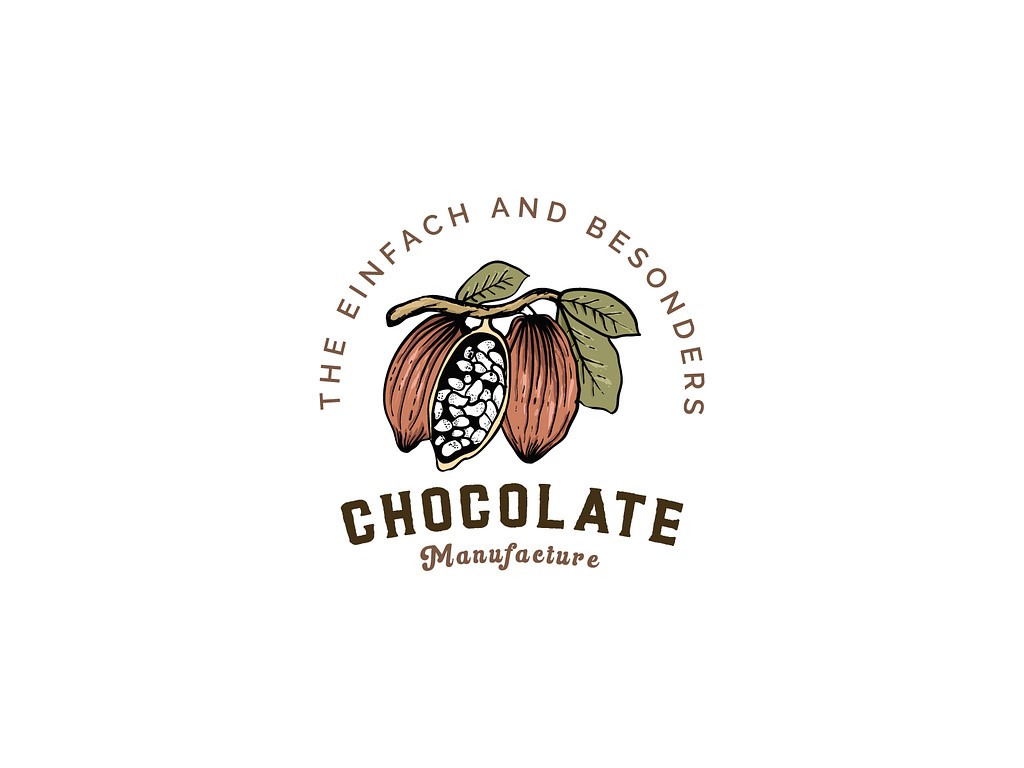
The hand-drawn, human-centered logo design trend is gaining momentum as brands seek to stand out in an increasingly AI-driven design landscape. As automated and highly polished visuals become more common, imperfection and dirty design aesthetics have emerged as a marker of authenticity. Hand-touched typography, organic line work, and analog-inspired textures such as stone, bark, or letterpress effects introduce a tactile, human quality that AI-generated logos usually lack. These graphic design elements help brands appear more approachable, genuine, and emotionally resonant while maintaining visual clarity.
In 2026, controlled imperfection is being used strategically to build trust and character. Rough edges, uneven strokes, organic shapes, and illustrative sub-marks create meaningful contrast against clean digital environments. Rather than signaling poor craftsmanship, these intentional imperfections communicate transparency and humanity. Brands that embrace this approach feel more relatable and credible, while those that appear overly perfect risk seeming impersonal or artificial to modern audiences.
3. Motion as a Core Design Standard
Dynamic and motion-based logo design is becoming an essential component of modern brand identity rather than an optional enhancement. In 2026, logos are increasingly designed with movement in mind, recognizing that brands now live primarily in digital, interface-driven environments.
Instead of relying on a single static mark, companies are adopting flexible logo systems that adapt in shape, color, or motion depending on context, such as mobile apps, social media, video, or augmented reality. Motion, when used thoughtfully, helps communicate brand traits like playfulness, innovation, or intensity while improving engagement and visibility across platforms.
Motion in logo design is purposeful rather than decorative. Subtle animations such as gentle expansion, smooth transitions, or responsive interactions reinforce brand personality through behavior, not visual excess. Designers are building logos that can scale down for small screens, animate for digital touchpoints, and retain a clear static version when needed.
4. Chaotic Maximalism
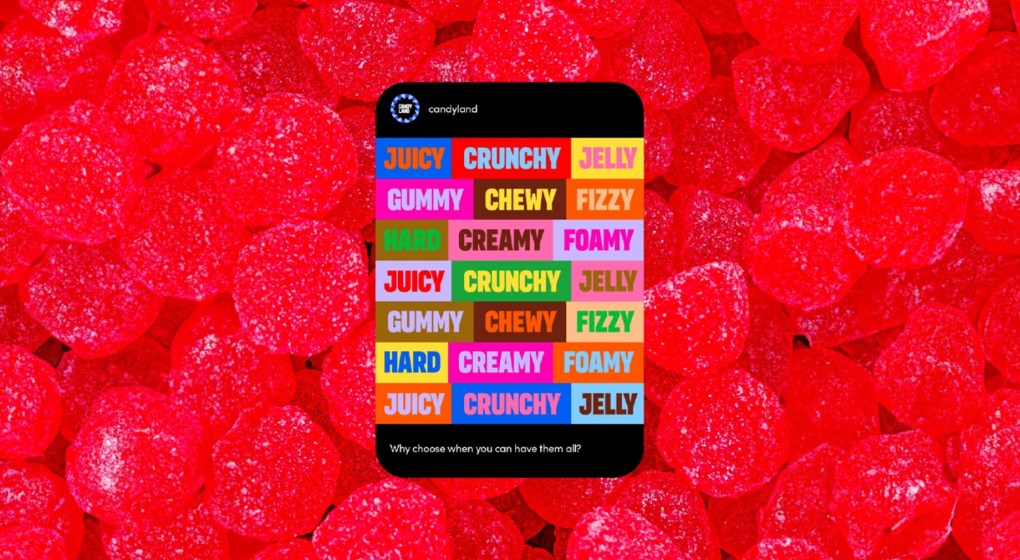
The maximalist and chaotic logo design trend embraces boldness, abundance, and playful unpredictability. Unlike minimalist designs, this approach layers patterns, textures, shapes, colors, and even 3D elements to create visually rich compositions. It draws inspiration from diverse design movements such as Art Deco, Memphis design, psychedelic art, and pop culture, blending historical and contemporary influences into a single, vibrant expression.
The goal is not disorder, but a carefully balanced visual complexity that feels energetic and engaging. Maximalist logos use contrast, overlapping elements, and vibrant color clashes to create a sense of movement and personality. Typography, shapes, and patterns interact in unexpected ways, giving the design a joyful, expressive quality.
This style encourages experimentation and self-expression, allowing brands to stand out by making a strong, memorable visual statement that delights the audience while maintaining intentionality and coherence.
5. Fusion of Freeform and Storytelling
The freeform and storytelling logo design trend emphasizes flexibility, narrative, and emotional connection. Unlike rigid or symmetrical layouts, freeform logos embrace editorial- or zine-inspired compositions with asymmetry, overlapping elements, and dynamic spacing. This approach creates visual rhythm and unpredictability, giving the design a playful, contemporary feel while drawing attention across digital and print platforms.
At the same time, storytelling is central to this trend. A logo that conveys a brand’s story, its values, mission, or unique personality becomes more memorable and meaningful to audiences. By embedding narrative elements into the design, brands can communicate their USP, evoke emotion, and build stronger connections with customers. This combination of freeform composition and storytelling ensures logos are not only visually striking but also resonate deeply, fostering recognition, loyalty, and a distinctive brand presence in a competitive market.
6. Strong and Vivid Color Palettes
Color continues to be one of the most influential elements of logo design, but in 2026, brands are moving beyond simple flat colors and embracing vibrant, high-contrast palettes that create instant recognition across digital platforms. Strong color palettes are becoming a defining element of logo design, playing a central role in brand recognition and emotional connection.
In 2026, color is no longer treated as a decorative layer added at the end of the design process; it is a strategic asset that carries meaning, personality, and recall. Carefully chosen colors help logos communicate emotion, values, and tone instantly, allowing brands to stand out even with simple forms. Rather than using many colors, brands are selecting fewer hues and applying them with intention.
High contrast, accessibility, and performance across both light and dark environments are key considerations. Designers are increasingly experimenting with bold gradients, neon-inspired accents, and dynamic color combinations that evoke energy, innovation, and authenticity. With logos appearing across websites, mobile apps, social media, and digital advertising, vivid colors help brands capture attention in seconds and leave a lasting impression.
The trend is clear: brands that dare to be bold are better positioned to stand out in an increasingly crowded digital landscape. When used thoughtfully, strong color palettes enable logos to capture attention without visual complexity, ensuring clarity, adaptability, and consistent impact across digital and physical touchpoints.
7. Tall Logos
As brands prioritize mobile-first experiences, logo design is evolving to accommodate a wider range of screen sizes and digital touchpoints. Tall and vertically oriented logos are emerging as a popular alternative to traditional horizontal layouts, offering greater flexibility for social media profiles, app icons, packaging, and digital advertisements. Beyond their distinctive appearance, vertical logos create a strong visual presence while maximizing space efficiency.
In 2026, designers are pairing these taller compositions with responsive logo systems, allowing brands to seamlessly adapt their identity across different platforms without sacrificing consistency. The result is a modern, versatile logo that remains recognizable whether viewed on a smartphone screen, billboard, or product label.
8. Layered and Overlapping Logos
Layered and overlapping logo design is emerging as a prominent trend in 2026, offering a way to add depth, dimension, and visual interest without sacrificing clarity. By stacking shapes, typography, symbols, textures, and colors, designers create contrast and balance that immediately draws attention. This technique transforms logos from flat visuals into more dynamic compositions, making them feel richer and more engaging across digital and print platforms.
Designers are experimenting with geometric forms, varied line weights, and carefully selected color combinations to separate and highlight different elements within the logo. Overlapping text and symbols help guide the viewer’s eye while adding controlled complexity. When executed thoughtfully, layered logos maintain a clean, structured look while delivering a bold, memorable presence that helps brands stand out in competitive visual environments.
9. Scribbles and Sketches
The scribbles-and-sketches logo design trend reflects a growing desire for authenticity, individuality, and human expression in branding. As polished, highly refined logos become more common, brands are turning to freehand drawing, doodles, and sketch-style elements to stand out. These designs embrace imperfection through uneven lines, loose forms, and intentionally unfinished details, creating logos that feel personal, expressive, and approachable rather than overly produced.
This trend brings a raw, back-to-basics aesthetic that emphasizes creativity and originality. Hand-drawn characters, abstract shapes, and playful illustrations give logos a distinctive voice and emotional warmth, helping brands connect with audiences on a more human level.
By rejecting rigid structure in favor of expressive line work, scribble-style logos communicate personality and authenticity, making them especially effective for brands seeking a bold, memorable, and relatable identity.
10. Typography as a Shape
The typography-as-shape logo design trend reimagines wordmarks by treating letters as visual forms rather than purely textual elements. While wordmark logos have made a strong comeback, brands are pushing boundaries by integrating geometric shapes, negative space, and symbolic forms directly into typography. This approach creates typographic logos that are both readable and visually expressive, allowing type to function as structure, symbol, and storytelling device at the same time.
By blending creative typefaces with shapes, brands can embed deeper meaning into their logos without adding extra graphic elements. The Squid Game logo is a notable example, where simple geometric forms replace or shape letters to convey hidden symbolism and narrative. This logo trend allows brands to communicate identity, hierarchy, or values subtly through typography, resulting in logos that are minimal yet conceptually rich, memorable, and visually distinctive.
11. Negative Space Logos
Negative space logo design continues to evolve from a subtle visual technique into a flexible, strategic branding tool. Traditionally used to create balance, clarity, or hidden symbolism, negative space is now being treated as an active design element rather than an empty area. Logo design teams are using white or blank spaces intentionally to guide attention, form secondary visuals, and communicate unconscious messages in a refined, artistic way.
In recent logo design trends, negative space is being approached as a customizable canvas that enhances responsiveness and adaptability. Logos can shift their appearance by filling or activating these spaces with patterns, textures, or contextual elements while maintaining the core mark. This makes negative-space logos highly versatile across backgrounds, platforms, and seasons, allowing brands to refresh their visual identity without losing recognition. The result is a logo system that feels open, dynamic, and future-ready.
12. Funky Fonts
The funky fonts logo design trend embraces creativity, playfulness, and experimentation with typography. Designers are using variations in line thickness, letter height, spacing, and text size to add depth, movement, and personality to logos. This approach allows even a single wordmark to feel dynamic and visually engaging, turning type itself into a distinctive design feature rather than just a label.
Funky fonts can range from retro-inspired typefaces to custom, unconventional letterforms that break traditional rules. Whether using all lowercase letters for harmony, exaggerated curves, or bold, uneven strokes, this trend encourages brands to explore typographic expression that captures attention, conveys character, and sets their identity apart in a crowded visual landscape.
Conclusion
As a designer, exploring the latest logo design trends for 2026 is an opportunity to discover your own style and push the boundaries of creativity. Whether it’s embracing motion, handcrafted elements, bold colors, or playful typography, experimenting with these logo design trends allows you to create logos that feel fresh, memorable, and relevant.
Incorporating these approaches thoughtfully can breathe new life into your designs while ensuring they resonate with today’s audiences and stand out in a competitive market. Contact Logo Experts and our creative team can help you transform these trends into a cohesive, professional logo that reflects your brand’s identity while staying ahead of the curve, ensuring your visual presence is both modern and unforgettable.
From free AI tools, design tips, color psychology, and expert strategies—a logo design guide—every small business and entrepreneur needs to create a perfect logo.
Your logo is the face of your brand. It will appear on your website, products, packaging, marketing materials, and in-store signage, essentially every place where people interact with your business. While a logo may look like a small visual detail, there is a tremendous amount of significance packed into it. Your brand values, target audience, industry position, personality, and story are all reflected in that single mark.
According to a study, more than 25% of consumers are more inclined to purchase from a brand with a recognizable logo. It makes one thing abundantly clear: A logo is not just a visual design; it represents a critical asset for your business.
A well-designed logo communicates a message about your company, signals your tone and personality, and gives customers their very first impression of who you are. It should be memorable, timeless, scalable, and uniquely yours.
So, how to design a logo? Whether you’re a startup founder, a small business owner, or an entrepreneur launching your next venture, this guide will walk you through every step of the logo design process in 2026, from defining your brand identity all the way to rolling your finished logo out across your business.
Why Your Logo Needs to Be Great
Your logo is the first visual element a potential customer notices. In a split second, it tells them whether your brand feels trustworthy, modern, playful, luxurious, or approachable. A poorly designed logo can undermine even the best product or service, while a strong logo design builds instant credibility.
Beyond first impressions, your logo anchors everything else: business cards, social media profiles, product labels, email signatures, storefronts, and digital ads. All of these materials will carry your logo, so it needs to work across every format and context. The investment you make in getting your logo right pays dividends across the entire life of your brand.
Logo Design Process – How to Design a Logo
Step 1: Define Your Brand Identity
Every great logo starts not with a design tool, but with a clear understanding of who you are as a brand. Before you sketch a single line, answer a few foundational questions. What does your business do? Be specific. A law firm, a vegan bakery, and a tech startup all need to communicate very different messages through their logos. Who is your target audience? Age, lifestyle, values, and spending habits influence what visual language will resonate. A logo targeting Gen Z consumers on TikTok will look very different from one aimed at C-suite executives.
Consider your brand values as well. Define your brand personality by imagining your brand as a person. Are you the reliable expert, the disruptive newcomer, the friendly neighbor, or the luxury tastemaker? Finally, identify what makes you different. Your unique selling proposition can inspire a powerful visual concept.
Create a concise brand identity brief, and this data will serve as the filter through which you evaluate every design choice in the steps ahead.
Step 2: Find Inspiration for Your Design
Once your brand identity is defined, it’s time to gather visual inspiration. This is one of the most enjoyable parts of the log design process, and in 2026, there are more resources than ever to draw from.
Explore design platforms. Websites like Behance, Dribbble, Pinterest, and Awwwards are treasure troves of logo inspiration. Search for logos in your industry and save anything that catches your eye.
Build a mood board. Collect images, color palettes, typography samples, textures, and logos that feel aligned with your brand identity. A mood board doesn’t need to be about logos specifically. A photograph, a piece of packaging, or even an interior design aesthetic can spark a direction.
Use AI tools to generate concepts. In 2026, AI-powered design tools like Adobe Firefly, Looka, Midjourney, and Canva’s AI features can help you rapidly prototype ideas. Use them to explore directions, but treat the outputs as starting points, not final products. AI-generated logos need significant refinement to be truly unique and professional.
Look at your industry with fresh eyes. Notice what visual conventions exist in your space. Then decide: do you want to fit in or stand out? Both are valid strategies depending on your goals.
Step 3: Check Out the Competition and Logo Design Trends
Evaluating your competitors helps guide a more strategic and impactful logo design. You need to know what your competitors’ logos look like so you can differentiate yourself and avoid accidentally creating something too similar.
Audit your top five competitors. Look at their logos, color choices, typography, and overall visual style. Ask yourself: What does the industry default look like? Is it overly serious, outdated, or generic? Where is the opportunity to look different?
Study 2026 logo design trends. Some of the dominant trends shaping logos this year include:
- Adaptable logos designed for dark mode and light mode from the start
- Retro-modern hybrids that blend nostalgic aesthetics with contemporary minimalism
- Kinetic and animated logos built for digital-first brands
- Bespoke lettering, custom-drawn wordmarks that no one else can replicate
- Sustainable and earthy palettes driven by the ongoing demand for eco-conscious branding
- AI-assisted custom marks that are then refined by human designers for originality
Logo design trends are informative but shouldn’t be followed blindly. A trend-chasing logo can feel dated within a few years. Many professional logo designers suggest that they use trends as context, not as a blueprint.
Step 4: Choose Your Design Style
Logo design styles give your mark a distinct visual personality. Before settling on a concept, understand the main stylistic directions available to you:
Classic Logos are timeless and authoritative. Think symmetry, traditional typefaces, and restrained color palettes. Law firms, financial institutions, and heritage brands usually gravitate here.
Retro/Vintage Logos evoke nostalgia and craftsmanship. Distressed textures, muted palettes, and serif or script fonts define this look. Particularly popular with food, beverage, and lifestyle brands.
Modern/Contemporary Logos are clean, geometric, and forward-looking. Flat design, sans-serif fonts, and bold negative space are hallmarks. Tech and professional services companies favor this direction.
Minimalist Logos follow the less is more rule. Strip everything down to its essential form. Minimalist logos work exceptionally well across digital platforms and scale beautifully at any size.
Fun and Quirky Logos are playful, approachable, and personality-driven. Irregular shapes, bright colors, and illustrated characters give these logos energy and warmth. Ideal for brands targeting families, children, or younger audiences.
Handmade/Handcrafted Logos are imperfect, authentic, and artisanal. Brush lettering, hand-drawn illustrations, and organic textures signal craftsmanship. Perfect for boutique brands, food producers, and wellness businesses.
Illustrated/Detailed Logos are intricate with high visual complexity. These work best when used at larger sizes, like on packaging or print materials.
You can combine elements from different styles, like a blend of a minimalist mark with vintage typography, and you will get the most distinctive results.
Step 5: Find the Right Type of Logo
Beyond style, you need to choose the structural format of your logo. Understand the primary logo types:
Wordmark (Logotype). Your business name, expressed through a signature font. Google, Coca-Cola, and FedEx are classic examples. Works best when your brand name is short, distinctive, and easy to read.
Lettermark (Monogram). An abbreviation or initials styled as a mark. IBM, HBO, and LV are well-known lettermarks. Ideal when your company name is long or complex.
Brandmark (Symbol/Icon). A purely visual symbol with no text, just like the Nike swoosh, the Apple logo, or the Twitter bird. Powerful once established, but typically requires time and investment to build recognition from scratch.
Combination Mark. A wordmark and a symbol used together. This is the most popular choice for new and growing businesses because it’s versatile; you can use both elements together or separately depending on context.
Emblem. Text contained within a shape, badge, or crest. Think Starbucks, Harley-Davidson, or NFL teams. Emblems feel authoritative and are particularly effective for food brands, schools, and organizations.
Abstract Logo Mark. A geometric or abstract form that represents your brand conceptually rather than literally. Pepsi’s sphere and Adidas’s three stripes fall into this category. These require strong design judgment to execute well.
Mascot Logo. A character or illustrated persona representing your brand. Mascots are highly memorable and create emotional connection. Common in food, sports, and family-oriented brands.
When choosing, think about how your logo will be used. A combination mark works best for most brands and gives you the most flexibility. A brandmark alone is a high-risk, high-reward strategy best suited to brands with significant marketing budgets.
Step 6: Understand Color Psychology
Color is one of the most powerful tools in your logo design arsenal and one of the most misunderstood. Your color choices will profoundly affect how your brand is perceived at a subconscious level.
Here’s what the major logo colors communicate:
Red — Energy, excitement, passion, and urgency. Used by many famous brands like Coca-Cola, Netflix, and YouTube. The color grabs attention instantly but can feel aggressive if overused.
Blue — Trust, reliability, professionalism, and calm. The most popular choice in corporate branding. Think Facebook, Samsung, and American Express. Works across almost every industry.
Green — Nature, health, growth, and sustainability. Dominant in wellness, food, and eco-friendly brands. Whole Foods, Starbucks, and Tropicana lean into green’s wholesome associations.
Yellow — Optimism, creativity, and warmth. McDonald’s golden arches are the iconic example. Use carefully—yellow can feel overwhelming at high saturation.
Orange — Friendliness, enthusiasm, and affordability. Amazon, Harley-Davidson, and Fanta use orange to feel approachable and dynamic.
Purple — Luxury, wisdom, and creativity. Historically associated with royalty. Cadbury, Hallmark, and Hallmark lean into purple’s premium feel.
Black — Sophistication, power, and elegance. Chanel, Nike (in certain contexts), and Apple use black to project high-end authority.
White — Cleanliness, simplicity, and modernity. Often used as a background or contrast color; rarely a dominant logo color on its own.
Pink—Femininity, romance, and playfulness—though in 2026, pink is increasingly used by gender-neutral and progressive brands pushing against traditional category norms.
Gold/Metallic—Prestige, achievement, and exclusivity. Common in luxury goods, hospitality, and professional services.
Choose one primary color and one or two supporting colors. Your logo needs to work in full color, in a single dark color for printing, and in white for use on colored or dark backgrounds. Avoid palettes that are too complex to reproduce consistently. Always test your colors across different backgrounds, screen types, and print formats before finalizing.
Step 7: Pick the Right Typography
Typography in logo design is more than choosing a nice font; it’s choosing a voice. Every typeface carries its own personality and associations, and the right choice can make your logo sing while the wrong one can undermine everything else you have done.
Serif fonts with small strokes or feet at the ends of letterforms feel traditional, authoritative, and elegant. They are common in law, finance, publishing, and luxury goods. Examples are Times New Roman, Garamond, and Playfair Display.
Sans-serif fonts are sleek and unadorned, making them feel modern, minimal, and welcoming. Dominant in tech, health, and contemporary consumer brands. Helvetica, Futura, and Montserrat are perennial favorites.
Script and handwritten fonts feel personal, creative, and warm. They work beautifully for brands with an artisan, romantic, or boutique identity. Use sparingly and ensure legibility at small sizes.
Display and decorative fonts are custom or highly stylized typefaces designed to make a statement. These should be used with caution; they can be deeply expressive but may sacrifice readability or versatility.
Slab serif fonts combine the weight of sans-serifs with the structure of serifs, creating a bold, confident look. Popular in construction, food brands, and businesses that want to project strength.
Points to Remember
Never use more than two typefaces in a logo. Ensure your chosen font is legible at all sizes, from a favicon to a billboard. If possible, commission a custom version of your font or invest in a unique typeface to avoid looking identical to other brands using the same free font. Always secure proper licensing for any font used in commercial branding.
Step 8: Create and Digitize Your Logo
With your direction set, it’s time to create. The process of getting from concept to finished file typically moves through several stages.
Sketch first. Even in 2026, a pencil and paper remain the fastest way to get ideas out of your head. Sketch multiple rough concepts; aim for at least 10 to 20 thumbnails before committing to any single direction. Quantity leads to quality at this stage.
Refine your best ideas. From your sketches, select two or three promising directions and develop them further, still on paper or using basic digital tools. Think about proportions, spacing, and how different elements relate to each other.
Digitize in vector format. Professional logos must be created in vector format using Adobe Illustrator, Affinity Designer, or Figma. Vector files are resolution-independent, meaning your logo will look sharp at any size, from a pen cap to a billboard. Raster formats like JPG or PNG are not appropriate for primary logo files.
Use AI tools. AI-assisted tools like Adobe Express, Looka, and Canva Pro can produce surprisingly polished starting points, especially useful for solopreneurs working on tight budgets. But for businesses that take their branding seriously, professional human design expertise remains invaluable for creating something truly distinctive.
To ensure originality, import your generated concepts into a vector program and redraw them manually, or use your AI concepts purely as a reference for proportion and composition. This ensures your final logo is clean, scalable, and entirely original.
Step 9: Adjust and Refine
The first version of your digital logo is rarely the final version. Refinement is where good logos become great ones. Step back from your design for at least a few hours, ideally a day. Fresh eyes catch things you miss when you’re deep in the work.
Fine-tune your details. Adjust letter spacing (kerning) between characters for visual harmony. Check that the proportions of every element feel right. Simplify anything that feels cluttered. Ensure that icon and text elements are properly aligned.
Step 10: Check for Scalability and Adaptability
A professional logo must work everywhere. Before finalizing, stress-test yours across the full range of scenarios it will encounter.
Size tests: Does your logo remain legible when shrunk to 16×16 pixels, favicon size? Make sure it looks equally strong at large scale on signage or banners.
Color variations: Carefully check whether your logo works in single-color black, white on a dark background, or grayscale. Make sure each variation should look intentional and strong, not like an afterthought.
Context tests: Place your logo on a business card mockup, a website header, a social media profile, a product label, and a t-shirt. Problems that are invisible in isolation become obvious in context.
Dark mode: In 2026, dark mode is the default for a large percentage of users. Ensure your logo looks great on both light and dark backgrounds.
If your logo fails any of these tests, revise before finalizing. Scalability and adaptability are not optional; they’re essential characteristics of professional logo design.
Step 11: Test Drive Your Logo
Before you commit, put your logo in front of real people and real scenarios. Gather structured feedback. Share two or three finalized directions with a sample of your target audience and ask which feels most trustworthy and memorable.
A/B test if possible. If you have an existing digital presence, some businesses test logo directions with small audience samples before making a final decision. Live with it. Use your top choice as your desktop wallpaper, print it out and stick it on your wall, and look at it every day for a week.
Step 12: Final Tweaks and Logo File Preparation
Once you’ve gathered feedback and made your decision, finalize your design and prepare your logo files for real-world use.
Technical specifications and file formats you’ll need:
- SVG — Scalable vector graphic. The gold standard for web use. Resolution-independent and infinitely scalable.
- EPS / AI — Native vector formats. Essential for print vendors and sign makers.
- PDF — Portable and print-ready. Share with vendors who don’t need editable files.
- PNG — Transparent background raster file. Use for digital applications where vectors aren’t supported.
- JPG — Flat raster file with no transparency. Use only when a transparent background isn’t needed.
Prepare multiple logo variations:
- Full horizontal version
- Stacked vertical version
- Icon-only / symbol-only version
- Wordmark-only version
- Light version for dark backgrounds
- Dark version for light backgrounds
- Favicon version
Store all of these in a well-organized brand asset folder. Having these ready from day one will save enormous time as your business grows.
Step 13: Integrate Your Logo into Your Business
With your logo finalized, it’s time to launch it into the world. Update your digital presence first. Upload your logo to your website, social media profiles, email signature, and Google Business Profile. Consistency across all digital touchpoints is critical. Your business cards, letterheads, brochures, packaging, and all branded print materials should carry your new logo. Ensure you’re using the correct file formats specified by each printer or vendor.
Introduce your logo to your audience. If you’re refreshing an existing brand, communicate the change to your customers. A simple social media post explaining your new look creates engagement and builds excitement rather than confusion.
Build Your Brand with Your Logo
Your logo is now the cornerstone of your brand identity, but it’s just the beginning. From here, everything else flows: your color palette, your typography system, your photography style, your packaging design, your website aesthetic, and your marketing materials.
By establishing your logo as a strong, intentional foundation, you have given yourself a clear visual language to build from. Every future design decision becomes easier when you have a logo that embodies who you are.
Now your business logo is ready to show the world its face.
Create Your Logo with Logo Experts
With a team of experienced brand strategists and graphic designers, Logo Experts specializes in helping startups, SMEs, and established businesses craft distinctive, meaningful brand identities from the ground up.
From initial brand discovery to the delivery of a complete logo suite and brand style guide, the team at Logo Experts takes a deeply collaborative approach, working closely with clients to understand their vision, audience, and goals before a single design concept is presented. The result is not just a logo but a visual identity that works hard across every platform, format, and context your brand demands.
Whether you’re launching a new business, rebranding an existing one, or simply ready to upgrade a logo that no longer represents who you’ve become, Logo Experts brings the expertise, process, and creative talent to get it right. Based in the heart of one of the world’s most vibrant and competitive business markets, the agency understands the unique visual landscape of the UAE and knows how to help brands stand out within it. To start your brand journey, talk to our expert logo design team.
Logos are an integral part of our daily lives, shaping how we see and connect with the world around us. From the apps we open on our phones to the products we consume and the brands we encounter at every turn, logos are everywhere, quietly influencing our perceptions and leaving lasting impressions.
While some logos are immediately recognizable and visually simple; just a letterform or a familiar symbol, others are carefully constructed with layers of meaning that go far beyond aesthetics. What many people overlook is that a logo is never just a graphic; it is a strategic communication tool designed to convey a brand’s identity, values, and promise in a single glance.
Behind many of the world’s most famous logos lies a deeper story, shaped by psychology, design theory, and brand strategy. Colors, shapes, typography, and even negative space are deliberately chosen to influence how we perceive a brand on a subconscious level. These hidden messages or subtle visual cues are not accidents; they are intentional design decisions meant to create emotional connections, spark curiosity, and reinforce brand recognition in an increasingly crowded marketplace.
As consumers, we encounter thousands of logos every day, yet rarely stop to question what they truly represent or why they resonate with us. In this blog, we take a closer look at some of the most iconic and recognizable brand logos in the world and uncover the hidden meanings embedded within them.
Why Do Brands Use Hidden Meanings in Logos?
Logos are designed to communicate ideas quickly and memorably. Hidden messages sometimes called visual Easter eggs add depth and intrigue to a logo. These subtle elements include negative space, symbolic shapes, typography tricks, or clever color usage.
Hidden meanings in logos help brands:
- Communicate values without words
- Create curiosity and emotional engagement
- Improve memorability and brand recall
- Differentiate themselves in competitive markets
In a world where consumers encounter thousands of brand messages daily, these thoughtful design elements make a logo stand out and stay relevant.
Famous Brand Logos and Their Hidden Meanings
1. Nike
The iconic Nike “Swoosh” is one of the most recognizable logos in the world. Its hidden meaning lies in motion and speed, inspired by the wing of Nike, the Greek goddess of victory. The swoosh conveys movement, athletic performance, and forward momentum, perfectly aligning with the brand’s message of achievement, motivation, and excellence.
2. Toyota
Toyota’s logo features three overlapping ovals and holds multiple meanings. The two inner ovals represent the relationship between the customer and the company, while the larger oval symbolizes the world embracing Toyota. Interestingly, every letter in the word Toyota can be found within the logo itself which is an intentional nod to versatility and completeness.
3. Audi
Audi’s four interlocking rings represent the merger of four automobile manufacturers: Audi, DKW, Horch, and Wanderer. Together, they formed Auto Union in 1932. The rings symbolize unity, strength, and technological collaboration that continue to define Audi’s premium positioning.
4. LG
At first glance, the LG logo appears to be a simple combination of the letters “L” and “G.” However, when viewed together inside the circle, they form a stylized human face. This subtle design choice represents friendliness, approachability, and human-centered innovation. The enclosing circle symbolizes the world, reinforcing LG’s global presence and its philosophy of putting people at the center of technology.
5. Baskin-Robbins
At first glance, the Baskin-Robbins logo looks playful and colorful. However, hidden within the letters “B” and “R” is the number 31, representing the brand’s famous promise of 31 ice cream flavors. This clever detail reinforces the brand’s core offering while remaining visually engaging.
6. Cisco
Cisco’s logo is inspired by the Golden Gate Bridge in San Francisco, where the company was founded. The vertical lines represent both digital signals and the bridge’s iconic structure. This dual symbolism reflects Cisco’s role in connecting people through technology while honoring its roots.
7. Amazon
Amazon, the world’s most famous logo, features a curved arrow stretching from “A” to “Z,” demonstrating that the company has a wide range of products and sells everything from A to Z. The arrow also represents a smile, subtly showing customer satisfaction and ease of use which are the two pillars of Amazon’s brand promise.
8. Continental
The Continental logo uses a bold “C” enclosing a horse, symbolizing strength, endurance, and reliability. The horse is also inspired by the heraldic symbol of Lower Saxony, Germany, where the company originated. The design reflects motion, performance, and trust which are the key qualities in the automotive and tire industry.
9. Domino’s Pizza
Domino’s Pizza features three dots in its logo, originally representing the brand’s first three stores. The founders planned to add a dot for every new location, but rapid expansion made that impractical. Today, the dots serve as a reminder of humble beginnings and consistent growth.
10. FedEx
FedEx is one of the most famous logo design examples with hidden meaning through negative space. Between the “E” and the “X,” there is a hidden arrow symbolizing speed, precision, and forward movement; perfectly aligned with the brand’s logistics and delivery services.
11. Hyundai
Hyundai’s logo resembles a stylized “H,” but it also depicts two people shaking hands, representing trust and partnership between the company and its customers. The tilted figure on the left symbolizes Hyundai’s forward-thinking commitment to customer service and continuous innovation.
12. Prada
Prada’s logo is intentionally minimalist, relying on typography rather than symbols. This understated design reflects the brand’s fundamental principles of elegance, exclusivity, and enduring luxury. The absence of decorative elements reinforces Prada’s confidence, communicating that the brand’s reputation and craftsmanship speak louder than visual complexity.
13. Instagram
Instagram’s logo has evolved significantly over time, but its core symbolism remains intact. The original design was inspired by a classic vintage camera, emphasizing photography and visual storytelling. The current gradient and simplified camera icon represent creativity, spontaneity, and global connection, while still paying homage to the platform’s origins in photo sharing.
14. LEGO
The LEGO logo is bold, colorful, and playful; mirroring the brand’s mission to inspire creativity and imagination. The rounded typography reflects childlike fun and accessibility, while the bright colors evoke energy and joy. The logo’s simplicity ensures it remains recognizable across generations, reinforcing LEGO’s enduring appeal to both children and adults.
15. Vaio

Sony’s Vaio logo ingeniously combines elements of both analog and digital symbolism. The “VA” is designed to resemble an analog waveform, while the “IO” signifies the binary digits 1 and 0, representing digital technology. Together, the logo communicates the seamless integration of analog and digital worlds; highlighting Sony’s innovation in computing and electronics.
What These Logos Teach Us About Effective Logo Design
Despite differences in industry and style, all these logos share common traits:
- Simplicity with purpose
- Strong symbolism aligned with brand values
- Timeless design that evolves without losing identity
- Strategic use of shapes, space, and meaning
These principles are especially important for businesses in competitive markets like Dubai, where strong branding can define success.
How Logo Experts Helps Brands Stand Out?
At Logo Experts, we specialize in crafting meaningful, memorable, and strategic visual identities. As a trusted provider of logo design services in Dubai, we work closely with businesses to gain a deep understanding of their vision, target audience, and market positioning. Our expert logo designers combine creativity with strategy to create logos that are not only visually striking but also rich in meaning. Hire a professional logo design agency in Dubai to create a brand identity that communicates trust, innovation, and professionalism at a glance.
Whether you are launching a new brand or rebranding an established business, hire Logo Experts and our talented team helps you build a powerful brand identity that stands out in a crowded marketplace and resonates with your target audience.
Final Thoughts
Hidden meanings in logos are more than clever design tricks; they are powerful storytelling tools. The world’s most iconic brands prove that thoughtful logo design can communicate complex ideas simply and effectively.
Whether you are a business owner planning to create a logo, a freelance logo designer seeking inspiration, or simply curious about the psychology behind great branding, understanding these visual secrets offers valuable insight into what makes a logo truly effective, memorable, and timeless.
And when you’re ready to turn strategy into design, Logo Experts is here to help you create a logo that speaks volumes, silently and powerfully.
A successful logo is worth a thousand words, and a talented logo designer is worth their weight in gold.
From Apple to Coca-Cola, and IMB to NASA logos are an integral part of any brand. Logos are more than just a pretty image, they’re a powerful tool for branding, marketing, and communication. Logos are the visual representations of brands we’ve grown to know and trust. And behind every successful logo is a talented designer who understands the intricacies of color, shape, and typography. But have you ever wondered who the amazing and real masterminds are behind these iconic designs?
10 Famous Logo Designers and Their Work:
Today, we’re taking a deep dive into the world of logo design and shining a spotlight on the top 10 famous logo designers and their most iconic works. From the yellow arches of McDonald’s to the swoosh of Nike, these designers have left an unforgettable mark on the world of branding and design.
So, buckle up and get ready to be inspired by the creative minds shaping our visual landscape!
1. Paul Rand – Iconic Logo Designer of All Time:
Paul Rand was amongst the earliest American commercial artists to adopt and use the Swiss Style of graphic design. American art director and designer, Rand was one of the most talented and skillful American graphic designers, best known for his iconic, timeless, and successful logos. It wouldn’t be inaccurate to claim that the other well-known designers on this list look up to him, his contributions to the design industry will undoubtedly endure.

His Successful Logos – IBM, ABC, UPS, and NeXT:
Throughout his career, he created successful logos that became timeless classics for decades for some of the biggest companies in the world, including IBM, ABC, UPS, and NeXT. Perhaps his most famous logo design is the logo he created for IBM in 1972.
2. Saul Bass – Oscar-winning Filmmaker + American Graphic Designer:
Saul Bass was an American graphic designer and filmmaker, best known for his iconic logo designs and film title sequences. Born in 1920 in New York City, Bass studied at the Art Students League in Manhattan and worked for a number of advertising agencies before branching out on his own.
 Image source
His Successful Logos – AT&T, Kleenex, United Airlines, and Warner Bros
Bass created logos for companies like AT&T, Kleenex, United Airlines, and Warner Bros. Saul Bass’s legacy as a graphic designer and visual storyteller is still felt today. His designs continue to inspire and influence designers around the world.
3. Milton Glaser – Renowned Designer for His Dynamic Work
Milton Glaser was another American graphic designer and artist known for his iconic logos and influential designs. Went on to co-found the innovative design firm Push Pin Studios in 1954. He later founded his own design studio, Milton Glaser Inc., where he worked until his passing in 2020.

His Successful Logos – I NY, DC Comics, and Brooklyn Brewery:
Glaser’s most enduring and famous logo design is undoubtedly the “I❤️NY” logo, which he designed in 1977 to promote tourism in New York City during a time of economic crisis. Glaser also created logos for other iconic brands, including DC Comics and Brooklyn Brewery.
4. Massimo Vignelli – Iconic Branding Designer:
Massimo Vignelli was an Italian designer and architect who made a significant impact on the field of graphic design during the 20th century. Creating brand designs and logos for well-known companies, including IBM, Knoll, Bloomingdale’s, and American Airlines, to mention a few remains one of the most recognizable logos in the world of logo design.

His Successful Logos – American Airlines, Bloomingdale’s, and Knoll
Vignelli’s contributions to the world of design are immeasurable, and his influence can be seen in countless logos and advertisements around the world. His dedication to simplicity, clarity, and timelessness has made him a true icon of modernist logo expert.
5. Ivan Chermayeff – Founder of the Chermayeff & Geismar & Haviv
One of the top graphic designers in the country, Ivan Chermayeff is also a co-founder of the renowned branding and design agency Chermayeff & Geismar & Haviv. The firm has created some of the most recognizable logos in the world and is widely regarded as one of the most influential design firms in history.

His Successful Logos – Chase Bank, NBC, National Geographic, and Mobil Oil
Perhaps the most famous of the firm’s logos is the iconic logo created by Ivan Chermayeff is NBC peacock logo then later the Chase Bank logo, which was created by Chermayeff & Geismar in 1961. In addition to the Chase Bank and NBC logos, Chermayeff & Geismar have also created logos for other iconic brands, including National Geographic and Mobil Oil.
6. Michael Beirut – Prominent Art and Graphic Designers
Michael Beirut is an American graphic designer and partner at the design firm Pentagram. Beirut’s work is known for its versatility, creativity, and clarity, and has won numerous awards and accolades throughout his career. As a logo expert, His design philosophy emphasizes the importance of storytelling and human connection.

His Successful Logos – Saks Fifth Avenue, Verizon, and MIT Media Lab
One of Beirut’s most famous logos is the redesign of the Saks Fifth Avenue logo and the MIT redesign of the Media Lab logo, which is a masterclass in elegant and intelligent design. Another of Beirut’s notable logo designs is the logo for Verizon.
7. Carolyn Davidson – Extraordinary Logo Expert for Timeless Logo
The Nike logo was created by American designer Carolyn Davidson. In addition, Carolyn Davidson was awarded an AIGA medal for her contributions to graphic design and was inducted into the organization’s hall of fame. Given how well-known she has become, Nike Swoosh was even chosen as one of Time Magazine’s 100 Most Important People for 2016.
Her Successful Logos – Nike
In 1971, Carolyn Davidson created the Nike Swoosh logo which has remained unchanged till now.
8. Rob Janoff – The Mastermind Behind Apple Logo
Robb Janoff, an American designer has collaborated with several different multinational businesses. Although he is not well known, he is best known for his involvement in the creation of the renowned Apple Logo. Following his work with Regis McKenna, Janoff started creating designs for silicon firms, including Apple.

His Successful Logos – Apple, Pepsi, Starbucks
Rob Janoff has designed logos for some of the most well-known companies in the world, including Apple, ESPN, and Starbucks. Graphic artist Rob Janoff has designed logos for some of the most well-known companies in the world, including Apple, ESPN, and Starbucks. In response to a question concerning his method, he said that “a successful logo should be basic enough to be made by hand (by children) and still have its integrity.”
9. Lindon Leader – A Typographer and Graphic Designer Best Known for His Typographic Work:
Lindon Leader has over thirty years of expertise in corporate brand design and can boil all of his designs to words ‘simplicity’ and ‘clarity’. His contributions to designs are undoubtedly notable as he was the recipient of the Annual Tribeca Disruptive Innovation Award in New York.

His Successful Logos – FedEx, Hawaiian Airlines, Disney and Novariant
In 1937, he created the first poster for Snow White and the Seven Dwarfs as well as the Mickey Mouse emblem. Many different logos and brand designs have been created by Lindon Leader. His more well-known clients include Jurgensen’s, Disney, Hawaiian Airlines, and Toyota.
10. Paula Scher – First Female Principal and Graphic Designer at Pentagram
In 1996, she was acknowledged in the Hall of Fame of the Art Directors Club. Her work is mostly recognized for its whimsical use of color and font as well as a focus on user-centered design, which emphasizes an object or service’s functionality rather than just its aesthetic appeal.

Her Successful Logos – Tiffany & Co.
Scher is most known for the enduring logos she designed for Tiffany & Co. She has, however, also assisted countless other businesses in developing memorable, striking designs. Scher won the Chrysler Award for Creativity in Design in 2000 and was inducted into the Art Directors Club Hall of Fame in 1998.
Wrap up:
The industry of logo design in Dubai and worldwide owes much of its success and recognition to the contributions of many great designers. From the iconic swoosh of Nike by Carolyn Davidson to the timeless Tiffany and Co. logo by Paula Scher, and the innovative Apple logo by Rob Janoff, these famous logo designers have left an indelible mark on the history of the logo design industry.
Each of their works has become a symbol of the brands they represent, and their designs have transcended time, culture, and language. Today, logo designing services in Dubai continue to draw inspiration from these legendary works, combining global design principles with local market insight. As a competitive and creative hub, every leading logo design company Dubai strives to uphold this legacy by delivering distinctive, future-focused brand identities.
As we continue to see the evolution of design, we can be sure that the legacy of these great logo designers and their work will continue to inspire and influence the next generation of designers.
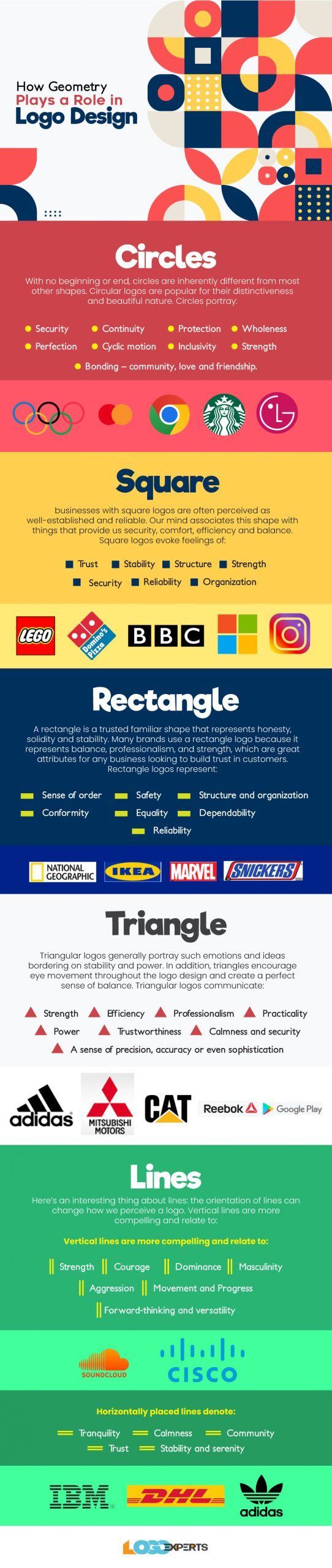
Research on visual communications has revealed that different shapes have different connotations in the human brain, with the ability to amplify an intended message to a target audience. The shape of your modern logo design actually communicates the essence of your business, which is something that big brands leverage to invoke the right feeling. Since the shape of your logo can influence customer perception, your logo can actually tell customers if you are friendly or serious, scientific or artistic, traditional or cutting edge. Not to mention, the shape of your logo can help you strengthen your brand identity, enhance recall, instill trust in your audience, ensure customer loyalty, and foster meaningful connections with your target audience.
Logo Experts, a reputable logo design company Dubai carefully selects and combines shapes to align your visual identity with your brand values and target audience expectations. To help you understand how the psychology of shapes can affect your logo design, here’s a crash course on the attributes associated with basic shapes:
Circles
The absence of corners make logo a softer shape. A circle has no beginning and no ending, which is why it is all-encompassing and welcoming. In the design world, circles are often associated with femininity, and are commonly used to invoke the feelings of security, continuity, and protection. Logo designers leverage rounded shapes to convey gentleness, light-heartedness, friendliness, approachability, and inclusivity. Overall, circles embody positivity and optimism; in short, all the attributes that attract people. Some big-shot brands with circular logos include Nivea, LG, Pepsi, Tide, AT&T, Adidas, Olympics, Nasa, Mastercard, HP, Target, BMW, and Pinterest.
Triangles
As opposed to circular shapes, triangles are all about sharp and abrupt corners, and what do corners signify: precision, stability, dependability! It doesn’t come as a surprise that triangles are often associated with control and ingenuity, as well as mysticism, enlightenment, and the arts. Some psychologists believe that triangles are often associated with masculine attributes, such as science, religion and power, so it doesn’t come as a surprise that triangles are the highlight in the logos of companies whose products have a masculine bias! The most interesting thing about this shape is that it can be positioned differently for creating different effects. For instance, a triangle with the tip pointing upward, exudes stability and power, while a downward pointed triangle communicates movement and motion. Some famous brands that have used this shape in interesting ways include those created and influenced by famous logo designers like Mitsubishi Motors, Delta, WB, Adidas, Reebok, Atari, Adobe, CAT, Qantas, and HSBC.
Squares and Rectangle
You must see a lot of squares and rectangles in modern logo design, and for a good reason. Squares are often used to denote equality, stability, balance, reliability, and conformity. The concrete corners and edges of these shapes offer your logo a sense of balance and endpoint, something impossible to achieve with circles. Before you pass these shapes off as being too boring or commonplace, remember that some of the biggest brands use these shapes since they give off a feeling of safety, dependability, and trust. Especially if you are looking to build a rapport with your target audience, using these shapes will inevitably send the right message. Think BBC, GAP, American Express, National Geographic, Dominoes, Legos, 7-Eleven, LinkedIn, Microsoft, Dropbox, Instagram, Adobe, Marvel, Cartoon Network and IKEA.
Lines
Lines have been used since time immemorial to convey messages. In modern logo design, vertical lines symbolize power, strength, dominance, masculinity, and superiority. Vertical lines are often used by businesses that want to represent power, progress and rising-up. On the other hand, horizontal lines have a much more placating effect, which is why they depict communication, a sense of community, calmness and patience, as well as a sense of movement and purpose. For instance, Spotify, a music listening app, leverages horizontal lines in their logo to communicate speed and connectivity. Similarly, Cisco Systems’ logo comprises its name with electromagnetic waves on top. Some famous brands that include lines in their logos include IBM, DHL, Spotify, Cisco, Soundcloud, Formula 1, Bumble, and Viracon.
Organic Shapes
Organic shapes take creativity to a whole new level with images and designs that take inspiration from nature, without conforming to shapes and geometric discipline. It’s not uncommon to see naturally occurring elements, from vehicles, to food, animals and even human faces. Look at how the Disney logo takes after the actual shape of the Disney Park and goes at great lengths to show the child-appropriateness of its content. In another example, Patagonia, leverages a mountain landscape as the backdrop for its wordmark logo. The mountains are used to convey adventure and natural beauty, and actually tell the viewer that it is an outdoor adventure brand!
Choosing the Best Shape for Your Logo
Before jumping down to the designing part, jot down the values and attributes that your logo should convey. You can check out your mission statement for inspiration or simply make a list of corporate values that you hold dear. Not to mention it is also important to determine who your target market is and what message you want to convey to them. Keeping the psychology of shapes in mind, choose a shape that can best embody the message your logo needs to disseminate. Remember how straight lines, circles, edged shapes, spirals, curves and jagged edges all imply different meanings. As a designer, you can leverage different shapes intelligently to infer particular qualities about the brand. Secondly, your chosen logo shape should also complement your choice of font and color. As with any design, you cannot base any decision on a single element. When creating your design, take all factors into consideration to ensure a coherent brand identity that shines.
In the infographic below, we will explore different modern logo design ideas and shapes and how they are perceived by the consumers. You will learn how to harness the power of shapes to design a modern logo design that stands on its own:
Do you find it difficult to hide a message in a logo design Dubai? If so, why don’t you use whitespace to get that message across? It’s one of the elegant elements that make a design interesting and engaging.
Whitespace is either kept within or outside the logo design. Designers place the logo’s main image or element visible to the eyes. Because this figure often describes the business for which the logo is created.
Apart from this main image, designers keep space for another or less visible image that users notice after looking at a logo for a while, using whitespace.
No doubt, designing a logo that contains these factors without making it messy is a challenge itself. And you need expert-level expertise to get the job done flawlessly.
Let’s explore whitespace a little more.
What is a Whitespace?
First things first, whitespace is also known as negative space. And it doesn’t have to be white in color. You can use any color, shade, or hue as a whitespace. It’s the area between different logo design elements.
Although it’s an effective design element, viewers don’t always get it. Designers incorporate whitespace in a logo to elevate aesthetics, add meaning or hide a secret message. But, viewers think the space could be used to add more visual elements.
According to the design perspective, negative space works as a tool to balance design elements and improve visual communication. It’s up to creative people how they use whitespace and make it fun for viewers.
Brands, such as Toblerone and FedEx have utilized negative space in their logos in the best way. The bear in front of the mountain in Toblerone and an arrow between the letters “E” and “X” in the FedEx make the logos 10x unique.
Here are a few important uses of whitespace that’ll convince you more to keep it between the logo design elements.
Provide Information with Whitespace
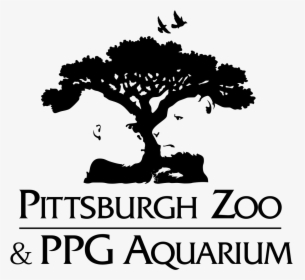
Logos design Dubai with negative space features different meanings without making the design overwhelming. You can spot images placed over images, or letters kept on images without making it look messy.
Professional designers who offer logo designing services in Dubai can even incorporate secret pictures, names, initials, or additional details about a brand in the logo to make it stand out in the industry.
Instead of avoiding it, use negative space to display essential elements that convey a brand message or any information that you want your target audience to know.
On the flipside, there’s no need to be obvious with whitespace in the design. Try using it to place important details that you can’t fit in the main image.
Add Minimalism with Whitespace


Merging whitespace with minimalism is another great way to craft a stunning yet functional logo. You can turn this negative space into usable space without adding details or multiple colors.
As a designer, you’re allowed to incorporate details with vibrant colors in the right way to communicate your brand message. But whitespace serves as a tool that make up for additional elements and color palette if you want to go for a minimal logo design.
Remember, there’re several ways to put your brand personality in front of your target clientele. And you can totally do that by executing a minimalist logo instead of opting for a bold one with bright shades.
You can make your minimal logo more interesting using whitespace creatively. For example, if your abstract logo uses lines and shapes, viewers will look at those elements and create a coherent image in their mind. Since they’re bound to look at the whitespace, use it to your advantage and make a cutting-edge logo.
Personification with Whitespace

Oftentimes, brands make direct eye contact with their potential customer base using a whitespace face in their logos. This strategy is old but a proven one. Brands use it to personify a design that otherwise appears cold or impersonal.
You shouldn’t ignore this technique while working on your logo simply because it’s a common practice. It works wonders, that’s why brands use it to add some life to their logos and capture the required attention.
To add a unique spin, you can incorporate whitespace to your logo, depending on your brand personality. It could either be a cute or excited face – whatever suits your brand and target demographic.
Use Small Color Palette with Whitespace
If you find yourself limited to three (or fewer) colors, combine them with negative space to keep the design visually engaging—this is a principle we also highlight in our infographic on modern logo design.
The contrast between a limited color palette and whitespace is also an effective way to create a striking three-dimensional image. Try sketching 3D cube on a paper for an example. Although it’ll be lines in different angles, your brand will interpret them as a cube. Isn’t it interesting?
But how does this happen? Your brain comprehends the sides that need to be shaded. You can use whitespace to achieve the same thing using your small palette.
Take Away
Whitespace or negative space is surely an awesome design tool that you shouldn’t overlook anymore. Whether you want to personify your brand logo or need to hide a secret message, whitespace can make anything happen, elevating the aesthetics of a logo design.
Many famous logo designers have incorporated negative space into their logos to communicated their message successfully. Using whitespace, you can create a cutting-edge logo, too.
It influences and changes the entire layout and creates a solid visual effect. Whitespace gives the kind of meaning to your design that stays for long, making it a memorable logo.
Did you know a logo helps make a robust first impression? Because people often observe an image first and then text. Creative imagery has been enabling brands to garner target audiences’ attention for decades.
Because pictures help trigger different emotions and create an ultimate impact. Which is why companies incorporated relevant imagery to their logo shapes and designs.
This imagery establishes loyalty, trust, or even other feelings that align with the business. With the help of this, brands also encourage the target audience to seek further information.
But how to create a distinct logo that does the right job? One sure way is to incorporate different creative elements, such as shapes, into your logo designs.
However, you can’t add a random shape to a logo and expect it to make a massive difference. Instead, understand the why and how of each shape and implement the right one into your logo design to achieve your targets.
This blog features different logo shapes and how brands use them to stand out.
The Importance of Shapes
Not everyone understands this, but shapes help put together a compelling logo design. On the flipside, our brain also pick out and memorize shapes with ease. Brands understand and use this factor to create a memorable logo.
When it comes to using shapes, bold ones are easier to recognize, and they make a long-lasting impact, too. Different shapes have different emotional and psychological influences, so it’s incredibly important to understand what connection you want to develop between your brand and its potential customer base.
See the following shapes and learn how they make a logo design unique yet meaningful.
Understand Geometric Shapes
The best part about geometric shapes is they look man-made. If you take a closer look at different shapes, such as circle, square and triangle, you’ll notice these don’t look natural.
So, when you want to add an essence of order and power to a logo, nothing can communicate that better than a geometric shape.
Circles
Circles are continuous. Incorporating a circle into a logo might be the best idea if you want to achieve the vibes of harmony, unity, or even timelessness. With a circular logo, you can also communicate softness and gentleness. Curves, on the other hand, possess feminine vibes.
Many famous logo designs of different industries have opted for a circular logo. Think about logos of brands, such as Mercedes-Benz or Target. They have visually interesting circular logos that set them apart in their respective niches.
Triangles
Considered as a directional shape, triangles can also influence the meaning, depending on its position and usability. When it’s positioned with the right side upwards, it demonstrates stability and power. Whereas, inverted triangles connect to instability.
Conversely, if a triangle is positioned to any side, it indicates movement and direction. For example, YouTube kept the triangle on the side to demonstrate movement and action.
Triangle logos are popular in the Science and Religion fields due to its association with power. But, a logo with triangle do well in medicine or extreme sports niche.
Rectangles and Squares
Just like you use bricks to build sturdy buildings, rectangles and squares do the same and represent your brand as strong and reliable entity. Both shapes are associated with stability, strength, and order. When you want to communicate strength through your logo, consider opting for either squares or rectangles.
Take Dropbox for an example. The square design coupled with the blue color convey the sense of reliability and trust, making it a reliable software system where you store your files and know they’ll be protected.
Understand Symbolic or Abstract Shapes
Symbols are simple in nature and work best when it comes to representing a particular cultural element. You can rely on these symbol as a visual language, as they carry ordinary meanings.
Remember, the symbols can be common and people may have seen them before. So you need to go for a creative approach while using them in your logo design.
Some interesting symbols are:
Arrows
Be it a travel logo or something that suggests movement or direction, you can never go wrong with an arrow in the design. However, the arrows are go-to elements for brands that deliver or ship goods. See the logos of FedEx and Amazon for inspiration.
Hearts

Do you want to communicate relationships or adoration? Use a heart in creative ways to garner people’s attention. Or, you can think about going for a broken heart to convey the emotions of sadness and despair.
Stars
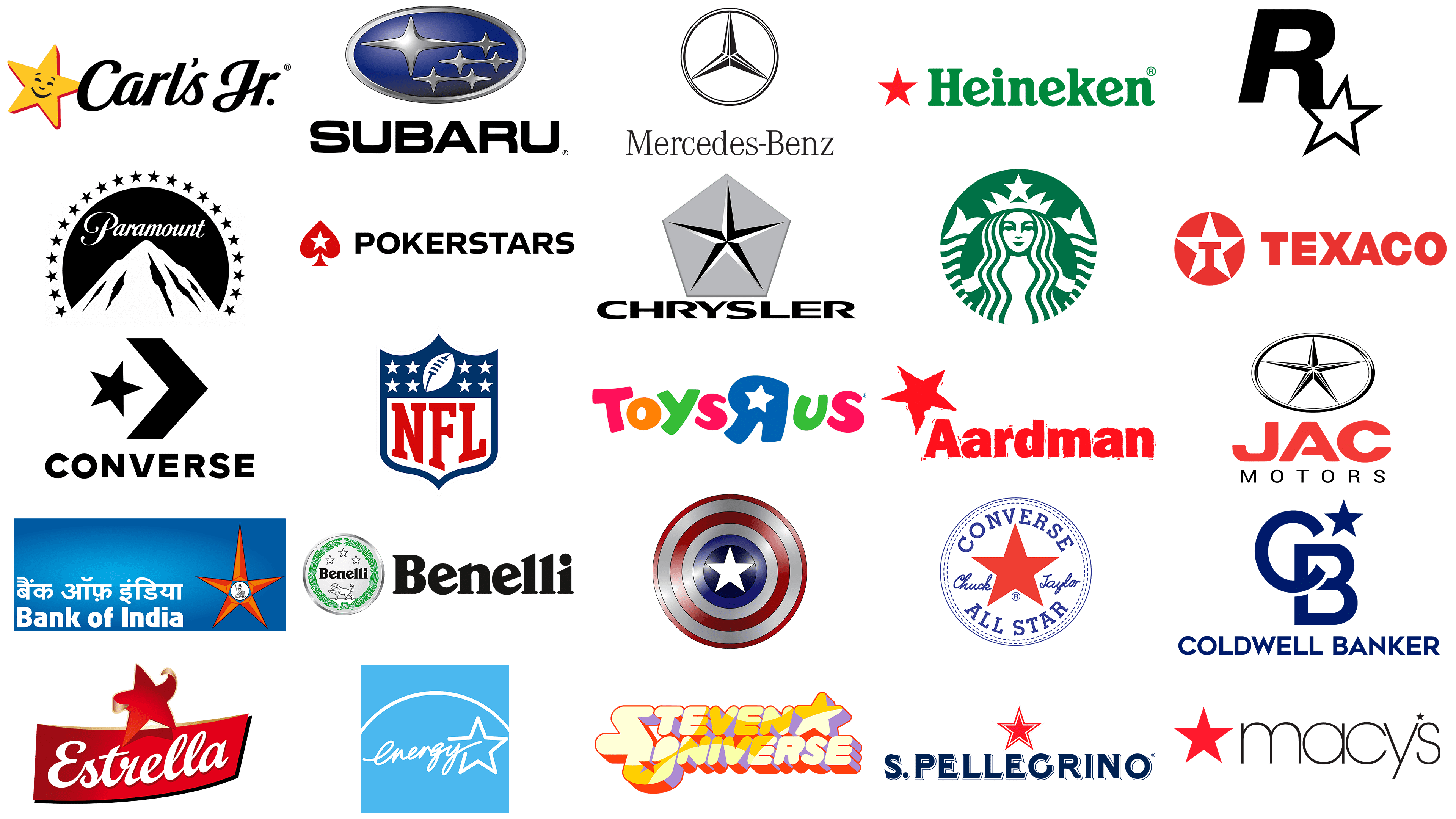
The best way to showcase patriotism and religion is to incorporate stars to a design. Stars are versatile symbols, so you can use them in a logo for an entertainment brand, too.
Understand Organic Shapes
Without defined edges and characteristics, organic shapes enables you unleash your creativity and come up with a unique logo.
These shapes include things occurring in nature, such as leaves, rocks, tree bark and so on. Professor Sunday Moulton, Ph.D. explains this concept further, saying:
“Organic shapes are defined by not being regulated by patterns or exact dimensions in their angles, curves, or lengths of lines. In fact, they are just like shapes we find in nature with all the randomness and freedom you might see in a rock formation, a tree branch, or a leaf chewed by an insect.”
Using an organic shape also gets you flexibility in what do you want to achieve more directly than a square or circle shaped logo. And logos featuring organic shapes convey a sense of familiarity and comfort, too.
They provide more knowledge regarding brand identity. For example, brands, such as Dove and Shell opted for logos that showcase brand name.
More so, focus on the following while incorporating an organic shape to your logo.
- Opting for usual organic shape that doesn’t resemble anything will be at the mercy of viewer’s interpretation. So, be ready to work a little harder to convey actual message through other design elements.
- An organic shape with jagged angle could lead to feelings of anxiety, whereas soft angles can help you achieve a more relaxed vibe.
- Organic shapes inspired by trees, leaves or water are best to evoke soothing effect on target audience. These elements are perfect for spas or holistic medical brands.
Wrap Up
Indeed, looking for ways to create an innovative logo is essential to stand out in the crowd. Incorporating shapes is one sure way to design a logo that attracts the potential demographic and make them recognize your brand whenever they see your logo.
Choosing a shape without studying your brand and analyzing its after effects won’t bring the desired outcome. So understand what does you brand stand for, and then go for a shape that enables you to communicate your message clearly. This strategic approach is what a professional logo design company Dubai focuses on to create logos that are not only visually appealing but also meaningful and memorable.
There’s no denying that a logo is an integral part of any business’s branding. It also serves as the first point of contact for your potential clients.
That’s why experts emphasize on designing a logo that represents your brand genuinely. There are certain qualities that you also need to consider to design a good logo, such as simplicity, relevancy, memorability, timelessness, and versatility.
Having these qualities in a logo make it identifiable. And when customers look at it, they connect the logo with your brand instantly. Some of the bigger brands opted for such qualities in their logos and achieve memorability impact.
If you’re about to design a logo, take a look at the logos of the following brands for inspiration.
Nike

A simple symbol that speaks about power and optimistic approach. Nike’s logo is successful in every aspect. It’s simple yet memorable. Designed by a student, Carolyn Davidson, it was an outline of the goddess Nike’s wing, to personify victory.
The outline came after the company’s founder, Philip Knight’s suggestion for the logo, which was something related to movement. But in America, it was seen as a check sign and as a tick sign in Britain.
More so, this omnipresent logo has become a symbol of positivity, especially when combined with the slogan “Just do it” in advertisements and campaigns.
Tesla
Another fascinating logo on the list is Tesla’s. The company that revolutionized vehicle industry, opted for a cool-looking letter “T”. Elon Musk – the company’s founder described this logo as “a cross-section of an electric motor.”
Like many companies, Tesla also incorporates first letter from the company’s name and tweak it a little for uniqueness. If you observe, the “T” has been designed to ignite an upwards motion which is powered by electricity. The logo also signifies moving towards future.
Looking at Tesla’s logo, we can safely say that adding details can make a significant difference to a logo. And in the Tesla’s case, these details incorporated meaning to the static monogram logo.
Starbucks

Whenever you need caffeine fix in a modern city, you’d probably lookout for the Starbucks logo. No doubt, this distinct emblem has successfully drawn millions of customers for years and pay more than usual for their daily coffee.
The Seattle-based company which was founded in 1971 wanted to incorporate history of coffee with city’s strong seaport roots. In old marine books, someone spotted a Norse woodcut of a twin-tailed mermaid from 16th century, this creature is also known as a siren.
The thought of having a seductress beckoning coffee enthusiasts towards their daily dose of caffeine was extremely irresistible. That’s why the twin-tailed mermaid has been there since years. Starbucks logo might have gone through minor tweaks over the years. But according to the brand, the siren has been there since its inception and she’s the heart of Starbucks.
Apple

Talking about logos of well-known brands, it’s impossible not to mention Apple. When you speak to an Apple fan, they’ll tell you the success of the tech giant lies in the performance of their products.
Functionality is essential and no doubt Apple has worked on it, too. But you can’t beat the fact that Apple has done a significant amount of work to make its product visually appealing.
And its logo on those products is enough to draw maximum attention to the user. The logo is simple and easy to spot anywhere from a TV show to your local coffee place. You either feel a pang of envy for not being an Apple user or thrill for belonging to an elite club if you’re already a user.
Toblerone

An example of great branding for several reasons, Toblerone’s logo is unique and unforgettable. If you’re a beginner, looking at this logo you’ll assume it’s inspired by the location.
Featuring a wordmark and mountain – the Matterhorn, this mountain is also the inspiration behind chocolate’s triangle shapes. These triangles are tied together to form a mountain range – so much thought process involved here!
On the flipside, the logo features an optical illusion that you can miss easily but once you see it, you’ll remember it. What’s even fascinating? The negative space on the mountain is actually a bear! Smart tricks like these capture attention and make your logo memorable.
Coca Cola

Different surveys have consistently concluded that Coca Cola’s logo has been recognized by 90% of the people across the globe. No doubt, the success of Coca Cola lies in its sheer longevity. The original logo from 1886, written in Spencerian script is closer to the latest design that anyone can recognize.
The take away from Coca Cola’s case is that it’s better to stick to what people know than constantly redoing your logo like most brands prefer to do. Coca Cola’s historical script awakes the sense of longevity and trustworthiness whereas its bright red color depicts excitement.
Amazon

Lower space and clean black and white Amazon’s logo is readable. If you look at it closely, you’ll learn how much goes into a logo that makes it distinct.
For example, the arrow that connects the letters “a” to “z” with one swift move depicts your experience on the platform. Some people even compare this arrow with “the smile” as it brings a friendly touch to the logo.
Moreover, the curve below the letter “z” where the arrow ends is kept curved to incorporate some movement to the design. The amazing part is that logo can be condensed into the favicon – the icon you see on a URL, webpage or tab. It’s handy to design a logo that shrink into a smaller icon, especially if you own or sell a digital product.
Wrap Up
Popular brands put a lot of thought and research to get their logos right. While some of them have opted for minor tweaks over time, others stick to original designs since the start, like Starbucks.
Be it a careful selection of colors or smart use of negative space, these logos can become a great source of inspiration for your logo designing project.
Your logo is usually the first thing people notice about your brand, and a great logo is the key to making a great impression. If you are looking for logo design inspiration, a good place to start is to read up on the rising logo design trends, so your new company logo resonates with customers. As our designers predict, 2022 is going to be the year of bolder, less constrained logos—reflecting our resilience in the midst of a global pandemic. Let’s dig deeper into the logo design trends that are going to make waves this year and see which trends are defining the 2020s’ aesthetic.
Tall Logos
There have been countless debates regarding the ideal composition of a logo, but it all depends on your usage and style preference. Narrow and vertical logos are a gulp of fresh air and creativity after the rectangle-based logos that we have been seeing for decades. Going vertical allows you to craft a unique brand identity and stand out with powerful and unconventional design. We especially love the trend of tall logos since this style fits better on marketing collateral and relieves you from having to design different versions of your logo for each medium for the sake of responsiveness. Not to mention, going tall gives you more options in terms of design elements and typography.
Layered Logos
Another logo design trend that has been making waves in 2022 is that of layered elements. Overlapping patterns, shapes, letters, symbols, textures, and colors not only add depth and balance, but also create contrast. Layering different design elements captures the eye and makes a powerful statement. Designers are playing with geometric forms, fonts, and color in varying line thicknesses and hues to break up other elements within a design. The only downside to this trend is that the sudden color and pattern changes can make the text less legible and distract the user.
Scribbles and Sketches
Scribbles, sketches, and doodling have made a comeback in the graphic design industry, and this time, they are here to add a twist to logo design. You may be thinking that freeform drawing is out the window, replaced by clean minimalism and traditional logo aesthetics, but recent logo designs say quite the opposite. This is because brands are looking to add a unique, personal touch to their branding, and nothing adds a human touch to a logo than freehand sketches, sloppily illustrated characters, and shapes drawn in a unique style. Be prepared to see a lot of hand-drawn logos with a raw, back-to-basics, unfinished look this year as opposed to cleaner, more “produced” logos you are accustomed to seeing.
Typography as a shape
2022 is all about pushing boundaries. We are seeing the revival of wordmark logos with many new companies using them in their brand identity design projects, but with a twist. While wordmarks are traditionally composed of typography, a lot of brands are blending creative typefaces with shapes in a harmonious way to create a cohesive logo.
The Squid Game logo combines shapes as a part of typography to hide secret symbology. If you have seen the famous K-pop season, you will notice that the rectangle represents the masses while the triangle denotes the elite class who controls them. The top circle represents the players who were living in extreme poverty and debt.
Negative Spaces
White or blank spaces in your logo, also known as negative space, is a time-tested technique to convey unconscious messages in an artistic way. Negative spaces are often used to balance the composition of your logo or to create a focal point. However, we are seeing a trend of designers treating blank spaces as blank canvases, filling them in creative ways depending on the needs of the brand in each moment. This trend is a breath of fresh air and gives a new meaning to responsiveness. These logos are extremely versatile and blend in with all backgrounds, since designers can fill their blank spaces with different elements or objects to indicate openness and adaptability. Whether you need to update your logo’s look from website to print, or from season to season, with customizable white spaces, sky’s the limit.
More vivid Hues
If you are familiar with the science of colors, you must know that each color has a unique connotation and emotional and logical implication. So, it comes as no surprise that designers look for new and creative ways to incorporate color into their brand identities. While flat, dull colors have been in vogue for a long time, giving way to pastel hues in recent years, we are now seeing dynamic and catchy logos with more bright and vivid colors. Bold is brave! Brilliant logos stand out and instill a positive and vibrant emotion in the viewer.
See how Adobe leveraged a multicolor gradient in its Creative Cloud logo, touting a full landscape of bold colors representing the various tools within the brand’s portfolio: magenta for InDesign, blue for Photoshop, orange for Illustrator, and so on.
Funky Fonts
We are seeing designers toying with various line thicknesses and text sizes to lend greater depth and complexity to their logo creations. Be it changing a single letter or the entire word, this trend wants you to break the barriers. Whether you want to go all lowercase like Adidas since lowercase letters fit together in visual harmony or use a retro 80s font, it all depends on how you can use the letter heights and line curves to your advantage.